Stalwart friend….(ch. 2)
It’s the 75th anniversary of the acclaimed Toyota off-roader, with the original “BJ Jeep” being made for U.S military use in the Korean peninsula in 1951. With decades of dune bashing, bog barreling and frontline fighting under its belt, the Land Cruiser continues to forge its hardy reputation in the motoring world. The automotive equivalent of a draft horse, it’s been to all the corners of the world and back. We have covered the earlier Land Cruisers prior and given the long, lush lineage, we will cover the ones from 90s and of course, the V8-powered ones as well here in the second chapter. Let’s get cracking.
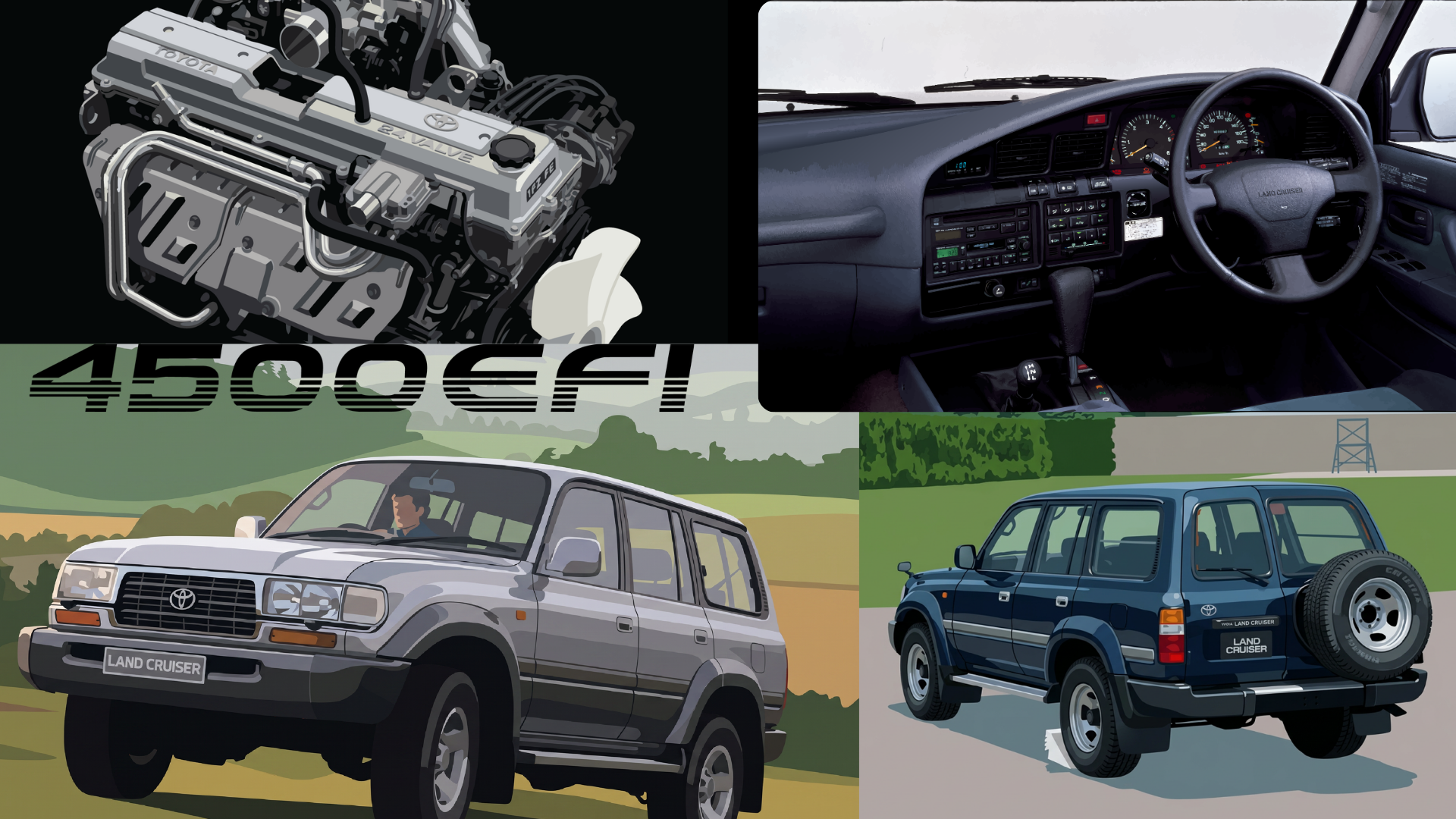
Widely….
….regarded to be the archetypal modern Land Cruiser station wagon, the LC80 introduced permanent 4-wheel drive, dual-overhead camshafts and 4 valves/cyl. Coil-sprung all-round with solid axles, the LC80 was developed during a time when engineering resource allocations were virtually limitless at Japanese car firms and nowhere was that more apparent than under the hood.
By the 90s…
…Toyota and other Japanese players had secured themselves a chunky yet stable market share which hovered around 90% in the lucrative Australian market. The Japanese “bubble economy” was reaching its peak and few cars of the time represented the zeitgeist (or jidaiseishin 時代精神 in Japanese) better than the Land Cruiser 80-series. Toyota was riding on a wave of success after giving the Germans a bloody nose at their own game with the Lexus LS400 and engineering budgets reflected that.
New competition from Nissan meant the J80 had to be coil-sprung all-round. Toyota again one-upped Nissan by giving buyers the capability of permanent 4-wheel drive. The powerful petrol engines from the Patrol also necessitated a major rework which Toyota did, skipping the SOHC format entirely to develop an engine seen as forward-looking for off-roaders at the time. In 1994, the F-series was finally retired from station wagon flagships and in its place was the 1FZ-FE (or the carbureted 1FZ-F as well in many markets), a traditional 4500cc straight-six cast iron block crowned with a dual-overhead camshaft (DOHC) 24-valve head. The unit was noted for its low-end grunt like its predecessors but unlike its predecessors, it would spin much freely at the top end to deliver stronger high-speed performance on the black top.
The diesels weren’t forgotten either. Base variants often featured the legendarily unbreakable 1HZ normally-aspirated diesel as standard, go further up the ladder and you’d find the now also legendary, HD-series of diesel-sixes. These oil burners introduced 4-valves/cyl. layout to the J80 & that helped Toyota retain their title as the makers of the burliest diesel wagons down under.
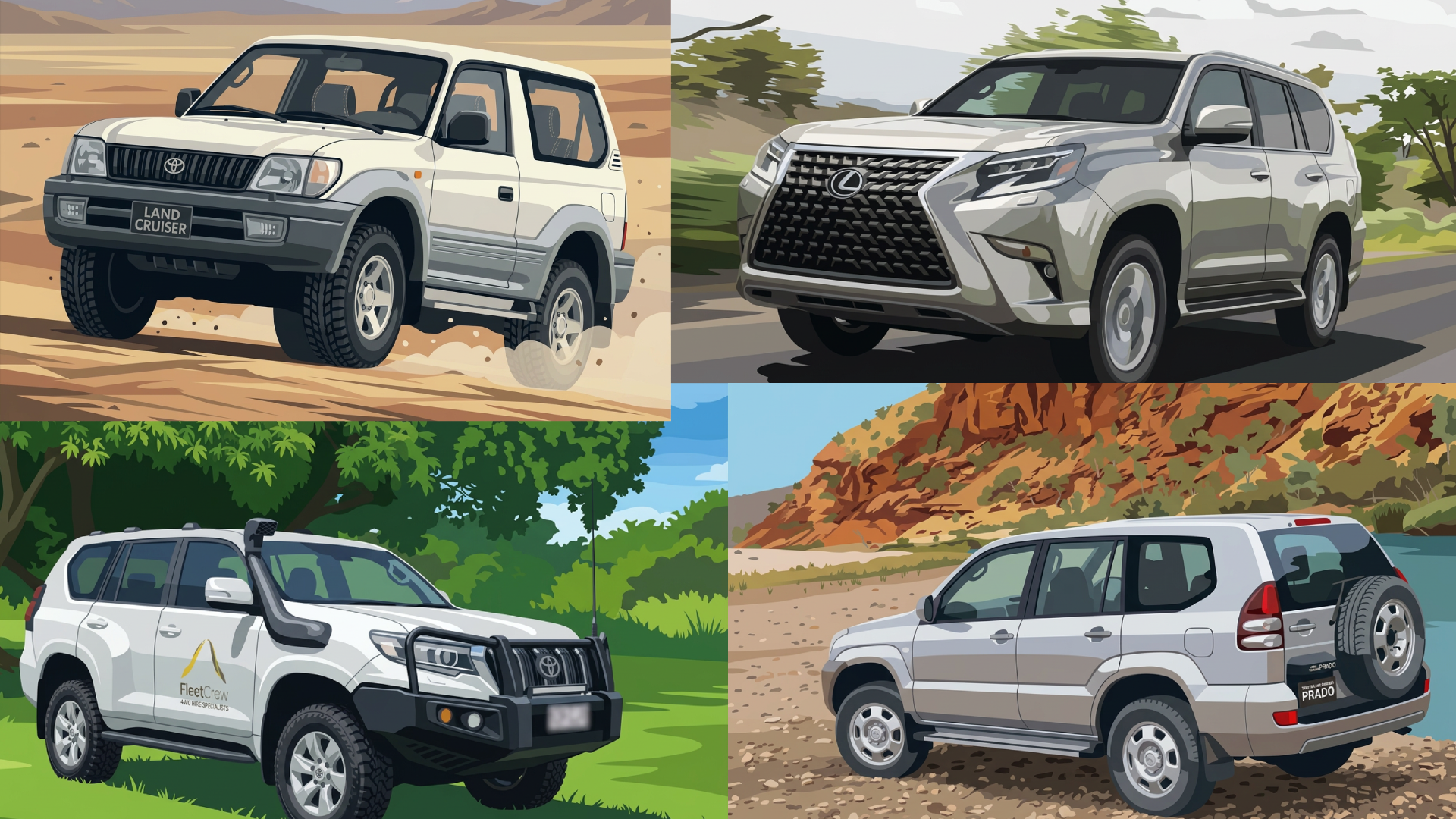
Also, by the 90s…
…the 4-wheel drive market shifted towards smaller off-roaders, Toyota had a light-duty version of the J70 but soon got serious with the introduction of the 90-series Prado. These primarily used Hilux running gear with their own platforms and only recently, the TNGA-F architecture.
Mind you, these may be soft-core only by larger Land Cruiser standards, they’re still very capable machines and of course, immensely popular. Alterations of the Prado have even been sold as the Lexus GX in the North-American and Middle-Eastern markets among other regions with 8-cylinder engines.
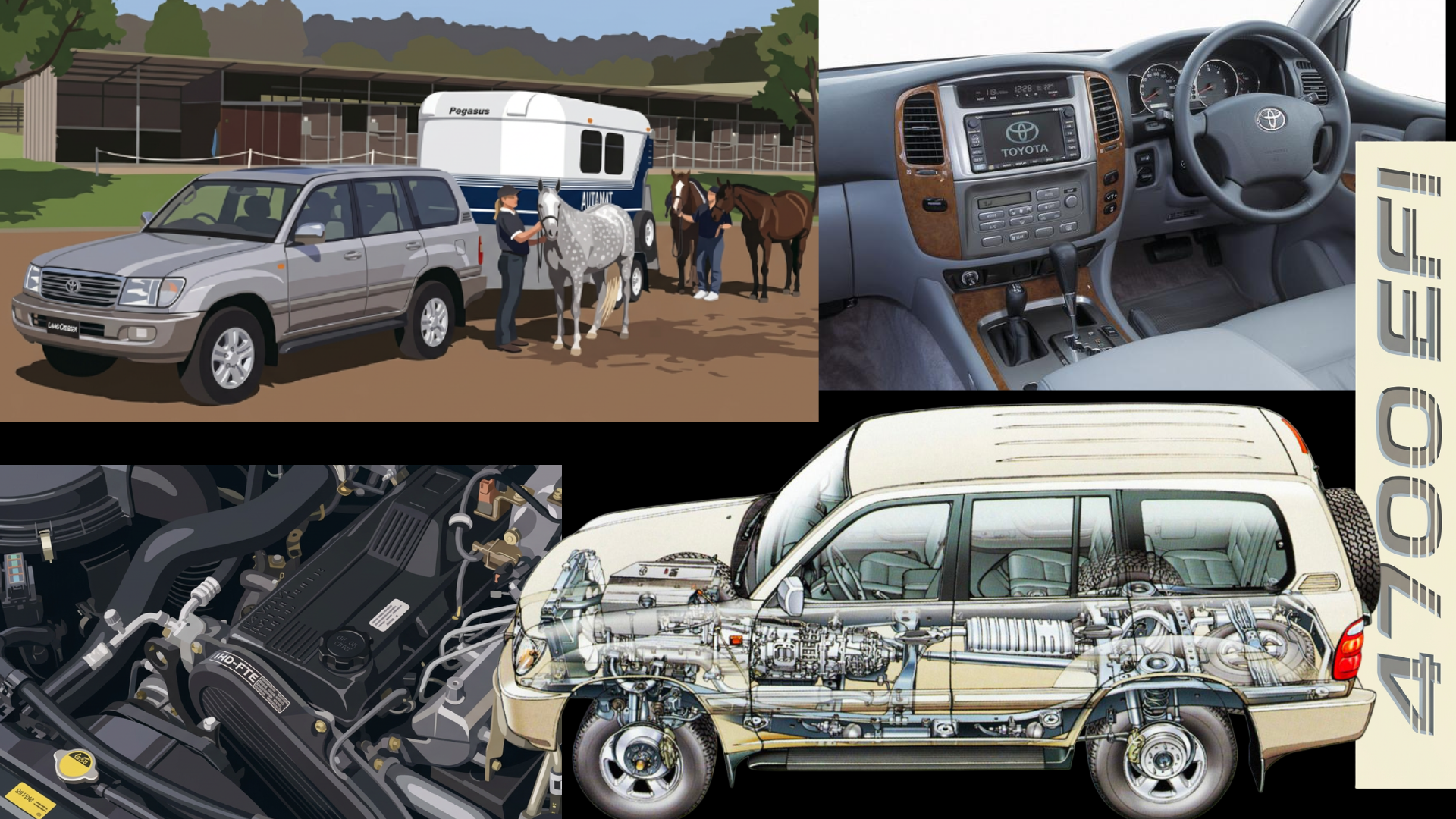
The 100-series
Seen by many as the peak Land Cruiser station-wagon, the 100-series Land Cruiser sold as the Amazon in certain parts of the world was a step-up in interior comfort and tech from the J80 with its advanced AHC and Skyhook systems.
The type had independent front suspension and for the first time, offered V8 power to the Land Cruiser driver. A simpler version of the J100 with J80 running gear was also sold as the 105-series in many markets in the Oceania, Middle-East and Africa. The 100-series standardised electronically-controlled precision fuelling for both the diesel and petrol engines with an intercooler for the oiler and Variable Valve Timing (VVT-i) on the intake side for the DOHC 2UZ gas-guzzler.
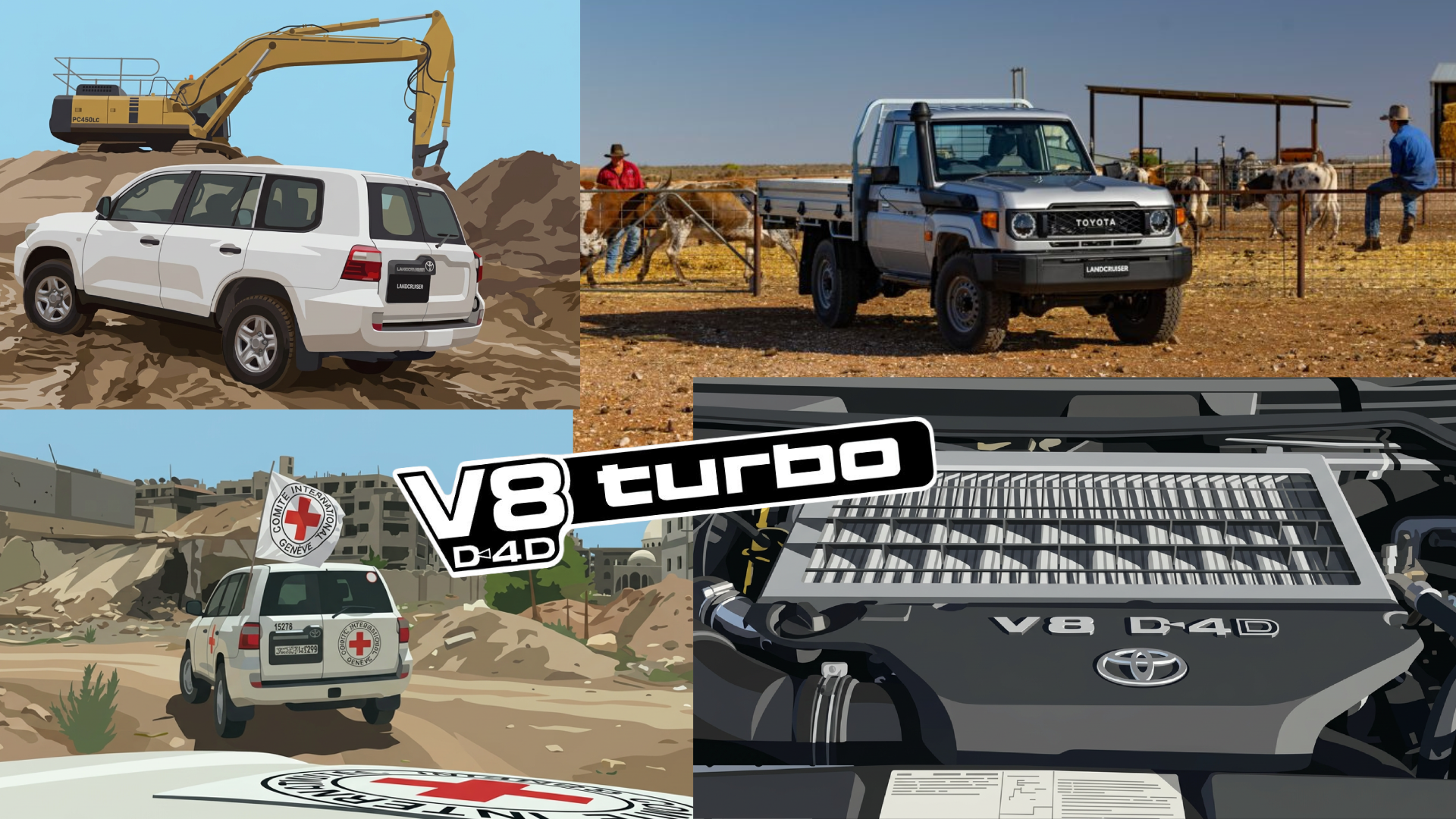
The VD-series D-4D turbo-diesel….
…will perhaps go down in history as the most appropriate powertrain for the Land Cruiser’s intended purpose. A 90-degree 4.5-litre DOHC, direct common-rail injected, 32-valved, intercooled V8 hunk of an oil burner that delivered an earth-moving 650nm of torque just above tick-over.
Forget payloads, this engine shrugs off 3.5 tonnes of trailers on gradients and yet it’s under-stressed. As any old Aussie “prick” will tell you, a simple ECU re-flash will unlock upwards of 850nm. Such over-engineering also made it ideal for harsh, abusive conditions despite advancements as it became the miner’s preferred down under in the J70.
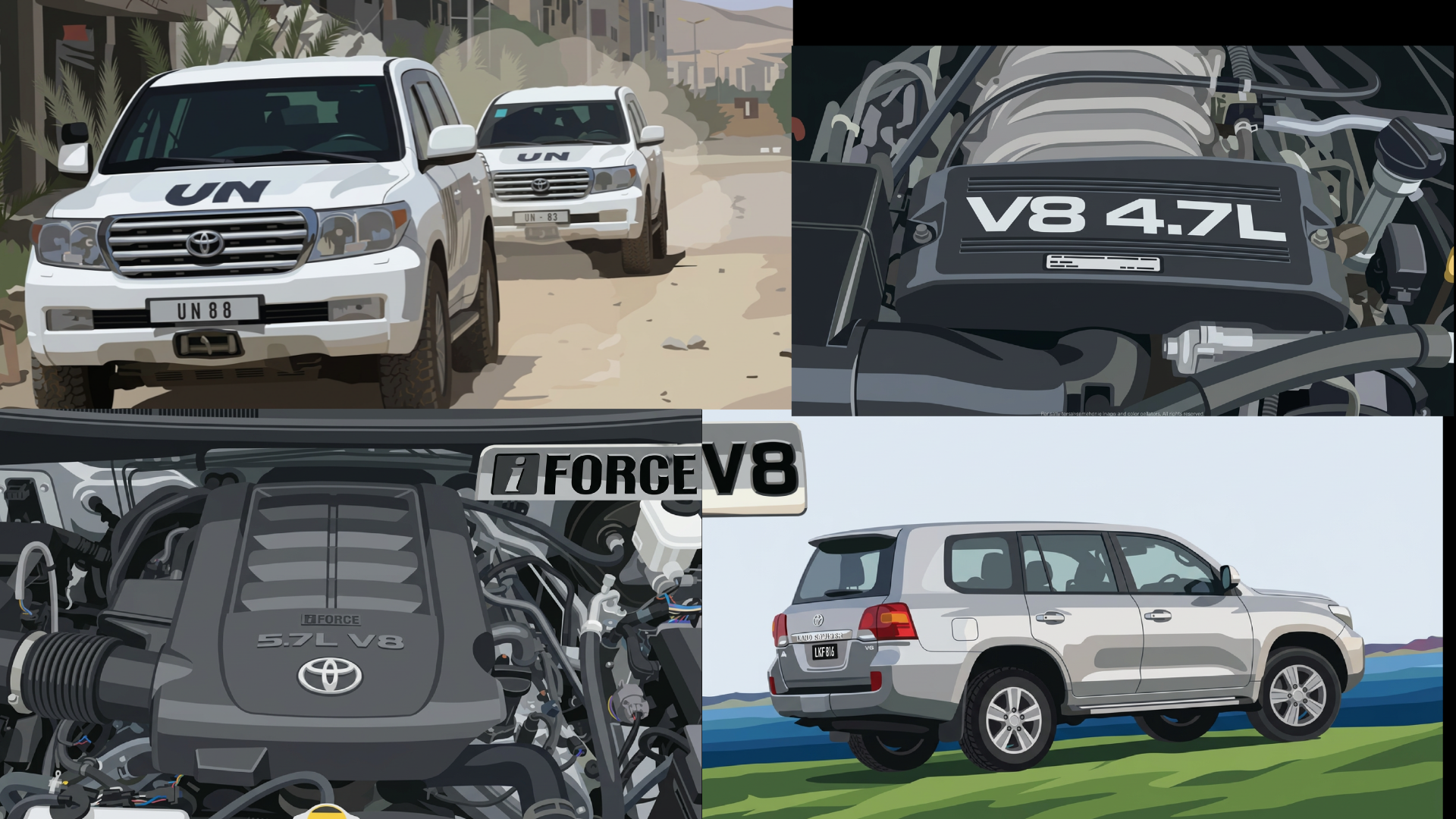
The silky resonant purr of …
…the UZ and UR-series V8s is something we all missed in the latest cruisers. These overbuilt, under-stressed buttery beasts characterised the 100 & the 200-series Cruisers.
The only iron-block member of the fabled UZ-family of V8s, the 2UZ-FE has now achieved an almost-mythical status among petrol engines with multiple examples crossing a million miles without overhauls. The UR-series may not have the same following as the UZ in Toyota circles but both the 4.6 1UR-FE and the power-packed 5.7 3UR-FE are consistent smooth operators in their own right.
The Gr8s of the 2000s
The 100-series and the 200-series forged themselves a reputation even among upscale buyers. Adaptive suspension, smooth 8-cylinder power and enough gizmos to keep the adolescents happy meant the Land Cruiser was as much of a hit in Palm Springs as it was in Alice Springs. Late 2000s were the time when one would personally argue both the Range Rover and the Land Cruiser reached the engineering pinnacle in their own respective ways.
These off-roaders along with the ever-popular Land Cruiser Prado and the indestructible heavy-duty J70 really came of age in 2010s. They became do-anything, go-anywhere, fit-any-lifestyle machines all while preserving their core values of toughness and capability off the beaten track. The widespread market cap of the Prado and the GX left the 200-series to hunt for Range Rovers and Y62 Patrols of the world and while some might argue it diminished the J200’s image as tough-as-nails station wagon, I’d argue it proved to the masses that an off-roader can truly do it all while being endlessly reliable.
It’s truly remarkable how these off-roaders were just as home at Geneva as they were in Ghana. The best bit, however about the J100s and J200s were the engines, no longer would you be stuck with a powertrain that’s gutsy off-road but feels stretched on it. The engines offered with the 100 and 200-series Cruisers made them tourers in the truest sense with all their creature comforts and adept running gear, particularly when paired with their sub-tanks which promised operational ranges akin to a true-blue over-lander straight out of the factory. While the 100-series is widely regarded as the finest station wagon by many, the 200-series armed primarily with a range of VD, UR-series bent-8s set the bar high & remains an unmatched performer.
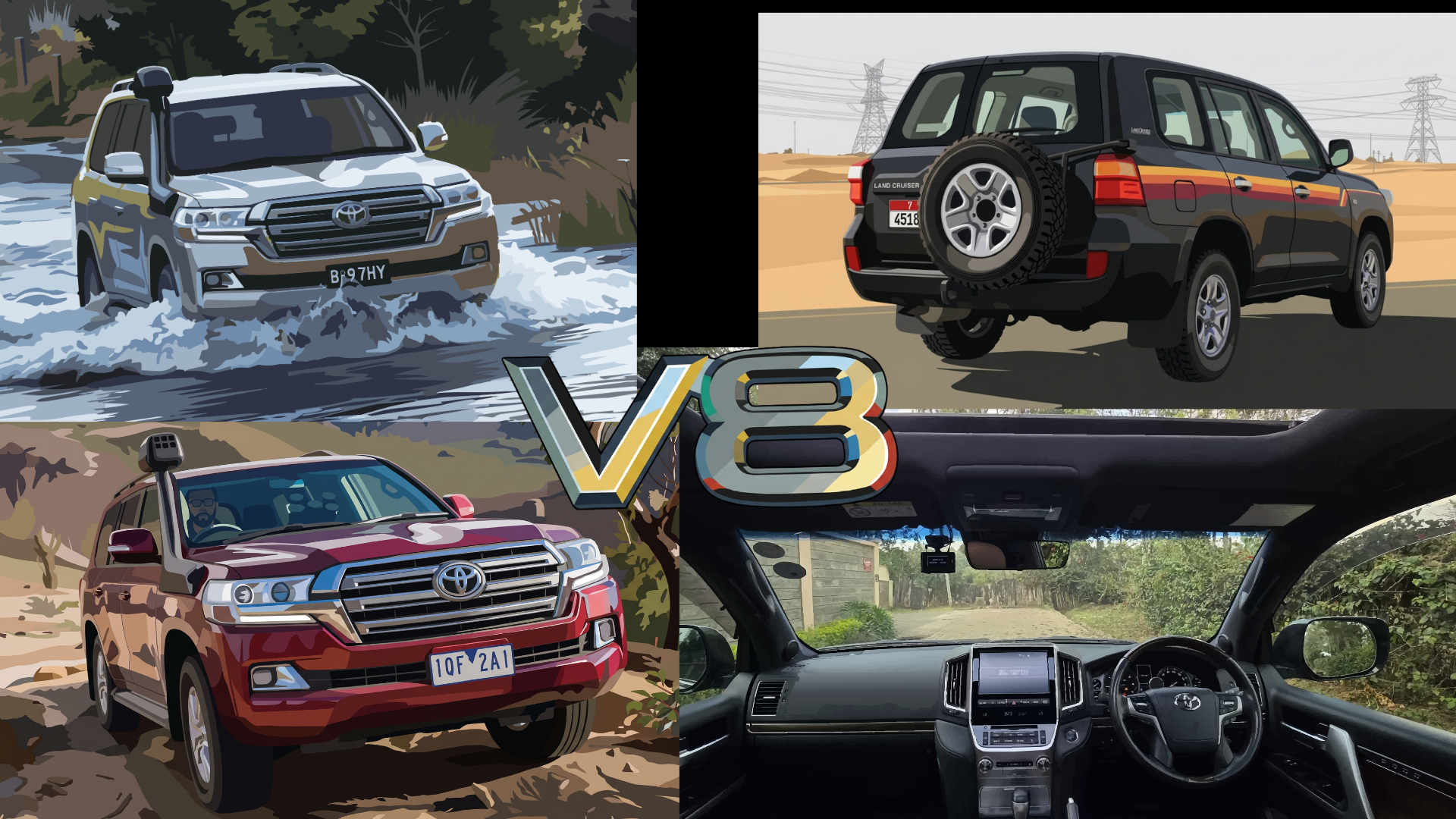
Defined by standard….
…8-pot power in most markets, the J200 was one hell of a performer. As industrious as it was indulgent, the model really solidified its status as the off-roader to beat.
The type was also available as a manual with the VD-series V8 or a GR-series V6 in select markets with basic trims. Wizardry such as Toyota’s KDSS, DAC, Crawl Control gave the 200 unparalleled ability leaving very little it couldn’t do on or off-road. It’s already certain that J200 Land Cruiser station wagons and heavy-duty J70s with oil-burning bent-8s will go down as all-time greats.
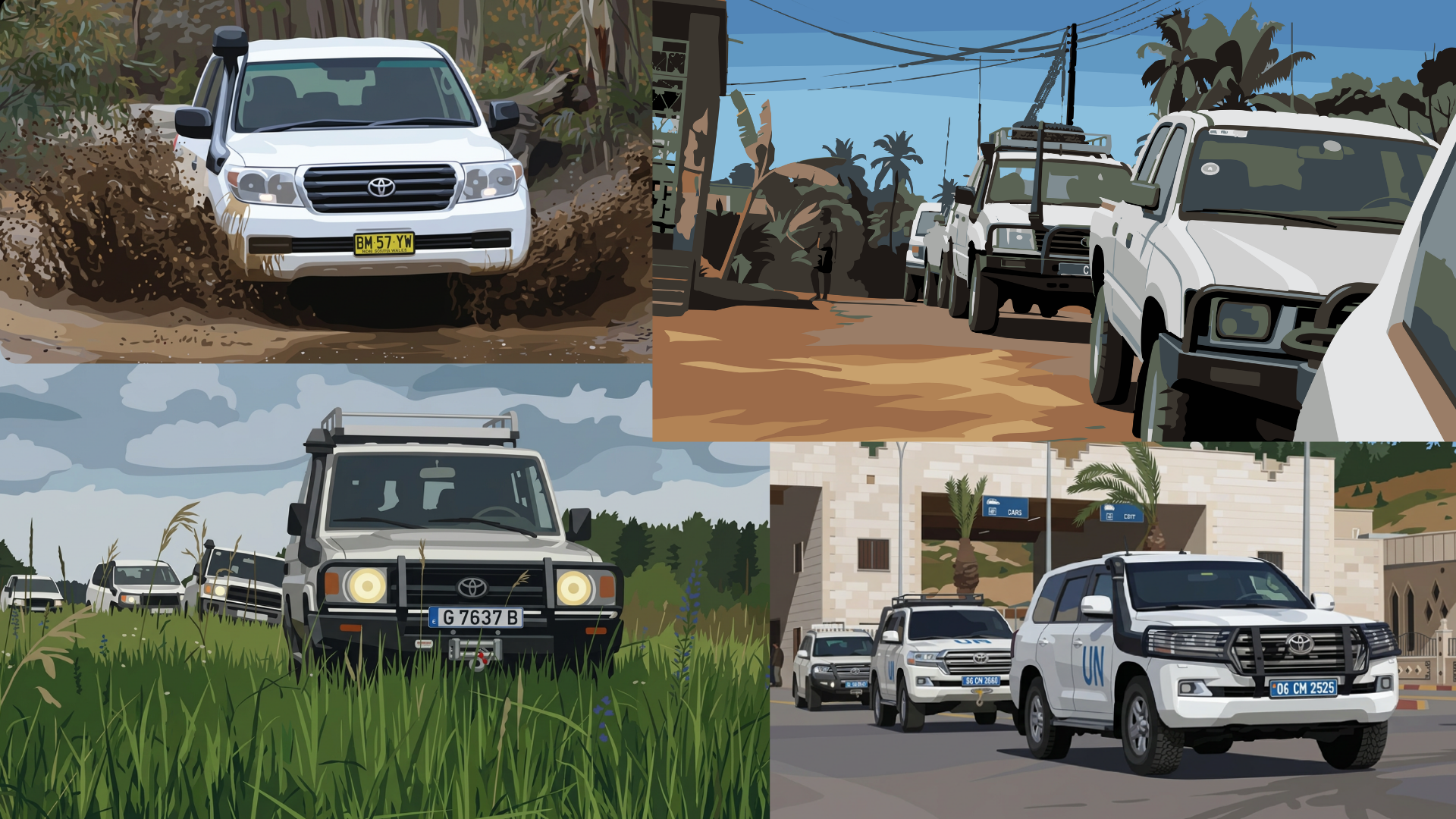
As is the case with….
….Land Cruisers of any generation, the 80, 100/105, 200 and the V8 powered 70-series saw significant action in the most dire of environments and conflicts worldwide. They have been adopted by humanitarian aid-agencies such as the World Food Programme, Red Cross, Médecins Sans Frontières & UNHCR to name a few.
J100s and J200s along with VD-V8 J70s unlocked new levels of personnel protection with underpinnings suitable for higher-grade armouring.
It’s rejuvenating…
….to write about such automobiles. The principles which permeate through all generations of Land Cruisers are now often overlooked in favour of modernity or materialism. The truth is, all automakers would have a Land Cruiser in their lineup in a heartbeat if they could. In this age of SUVs, I frankly felt ashamed of using the same term for the Land Cruiser. After all, it’s so much more than that. To some it represents freedom (incl. not-so-good people), to others it could mean education, medicine, adventure, responsibility, farm-work or even a school-run.
Built deliberately to last decades in the third world, its contributions are far greater than what people in the developed world compare it to. We won’t have a conversation about a GLS Mercedes in 10 years’ time but I’m sure a plucky chap covered in motor oil smelling of diesel will get a stationery 78 Troopy started up in a barn somewhere. Duty and dependability is what it represents best and therefore truly is among all machines during merry and misery, our stalwart friend: The Toyota Land Cruiser.
