Stalwart friend
It’s the 75th anniversary of universally acclaimed Toyota off-roaders. With seven and a half decades of dune bashing, bog barreling and frontline fighting under their belt, they continue to forge their hardy reputation in the motoring world. The automotive equivalent of a draft horse, the likes of the Land Cruiser have been to all the corners of the world and back. We’ll cover the 80-series and the V8 Land Cruisers later given the long, lush lineage. With such an image, one is compelled to take a look back at our old Oriental warriors over the years.
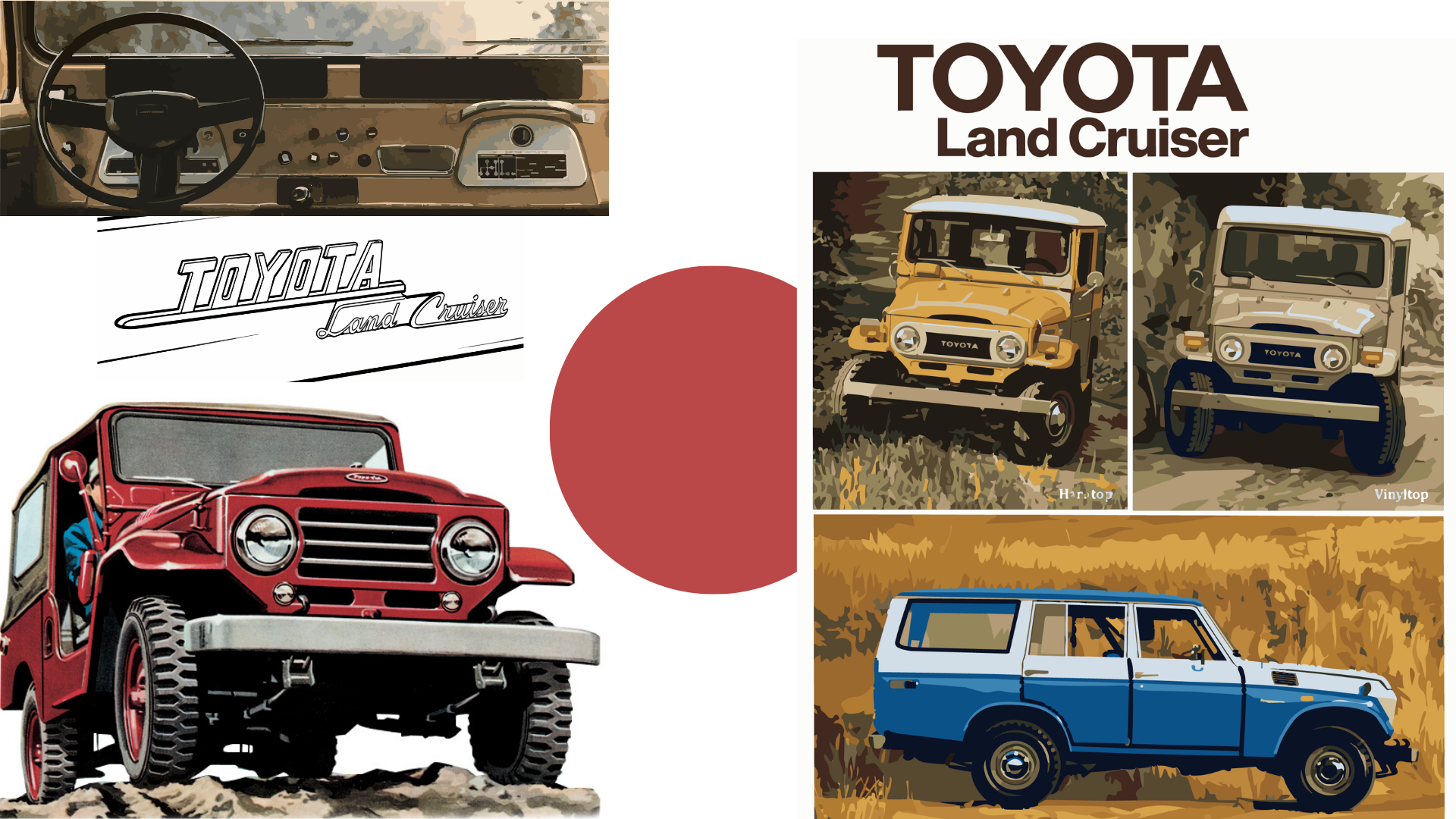
Conceived….
….in a fractured world, the BJ “Jeeps” were all set to drive out communist forces out of the Korean peninsula in 1951 and that was when Toyota would serially build their light-duty military off-roader, albeit in small numbers.
Like the battle rifles of yore, it was a product of peace in a world thoroughly weary of war. As we’ll come to see, war never left the Cruiser’s side as it would go on to cement its place in history.
The early years
Powered by a Type-B OHV 3.4 litre straight-six petrol offering more grunt, the type later found favour with the Japanese National Police Agency. The “Land Cruiser strategy” became the default market entry roadmap for Toyota into numerous global auto markets as they would first prove the quality of their motor cars with the proven Land Cruiser and the other models would follow shortly after. And proven it was, Toyota test driver Ichiro Taira drove the BJ to the sixth stage of Mount Fuji being the first motorised vehicle to climb that high in 1951. The impressive bit is that unlike the Willys Jeep or the Land Rover, the BJ did not have a low-range transfer case even though the straight-six in the Oriental machine had a much meatier bottom-end compared to its Western brethren. Making up a third of all the automobile exports and a symbol of post-war Japanese industrial might, the criticality of the Land Cruiser cannot be overstated.
The BJ became the Land Cruiser 20-series in 1954 and by the end of the same decade it started local assembly in Brazil (where it would be made locally until 2001 as the 40 series) as the “Bandeirante” with a Mercedes-sourced OM324 diesel available during the early 1960s. Shortly after, the 40-series Cruiser introduced a range of in-house diesel engines starting with the export-spec long wheelbase models and smaller 3-litre diesels for domestic market all now paired with a low-ratio transfer case. Selling more than 300,000 units by 1973, the Toyota Land Cruiser was the de-facto economy builder both overseas and at home. Front disc brakes were introduced and select markets got a larger 2F 4.2-litre petrol ‘six during the mid-70s. Irish army also bought a few Cruisers of their own, even though most of them rusted away shortly after on salted roads, a characteristic of Japanese cars from that era. During the late 60s, Toyota sensed the recreational off-road market growing and introduced the FJ55 “Iron Pig” intended primarily for Australia and North America.
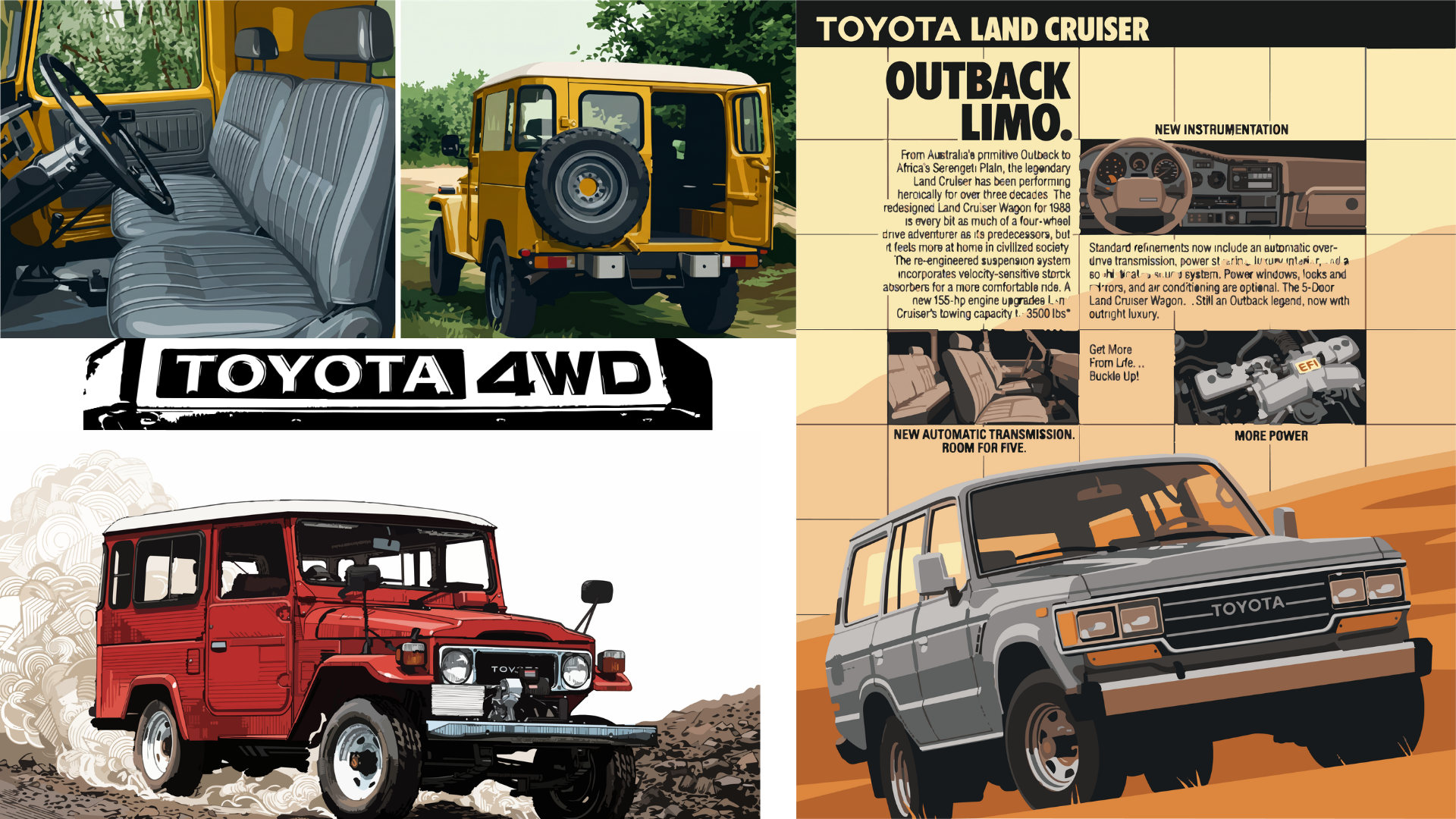
The 1980s…
….marked the end of production run for the legendary 40-series (in most parts of the world at least) and the Land Cruiser gained a more civilised image with luxury amenities instead of solely being seen as a pair of work boots.
The decade saw introduction of fuel-injection, the J60 station wagon, the legendary 70-series and adoption of these machines by a rather different sort of clientèle starting in West Africa.
Gaining notoriety
By 1981, the Land Cruiser had already sold more than a million unit worldwide & with high-roof versions, multi-zone air-conditioning and stereo systems, the J60 was winning favours with the posh as well. The hardy 2H straight-six oiler from the J40 won hearts down under in 60-series station wagon. As the demand for such engines in the premium station wagon category rose in diesel-doting markets, Toyota offered the 12H-T straight-six 4-litre turbo-diesel with direct-injection in 1985 & successfully one-upped Nissan who used the indirect-injection SD33T ‘six on the Patrol. The new running gear meant the station wagon set new standards for towing and performance without penalising fuel consumption.
The heavy-duty utility models saw a major update with the ageing J40 being replaced by the J70. The mark was also locally assembled overseas in Colombia, Venezuela and Portugal being offered with so many powertrain configurations throughout the globe it’s almost mind-numbing particularly when we consider the J70 was also offered in a light-duty avatar with smaller engines for the growing consumer lifestyle market. The J60 would do well for Toyota in the 1980s although the coil-sprung GQ Patrol and its potent petrol offerings were quickly gaining market share for Nissan by 1988 in key markets like Australia and the Middle-East despite the improved fuel-injected 3F-E being a major addition to the lineup.
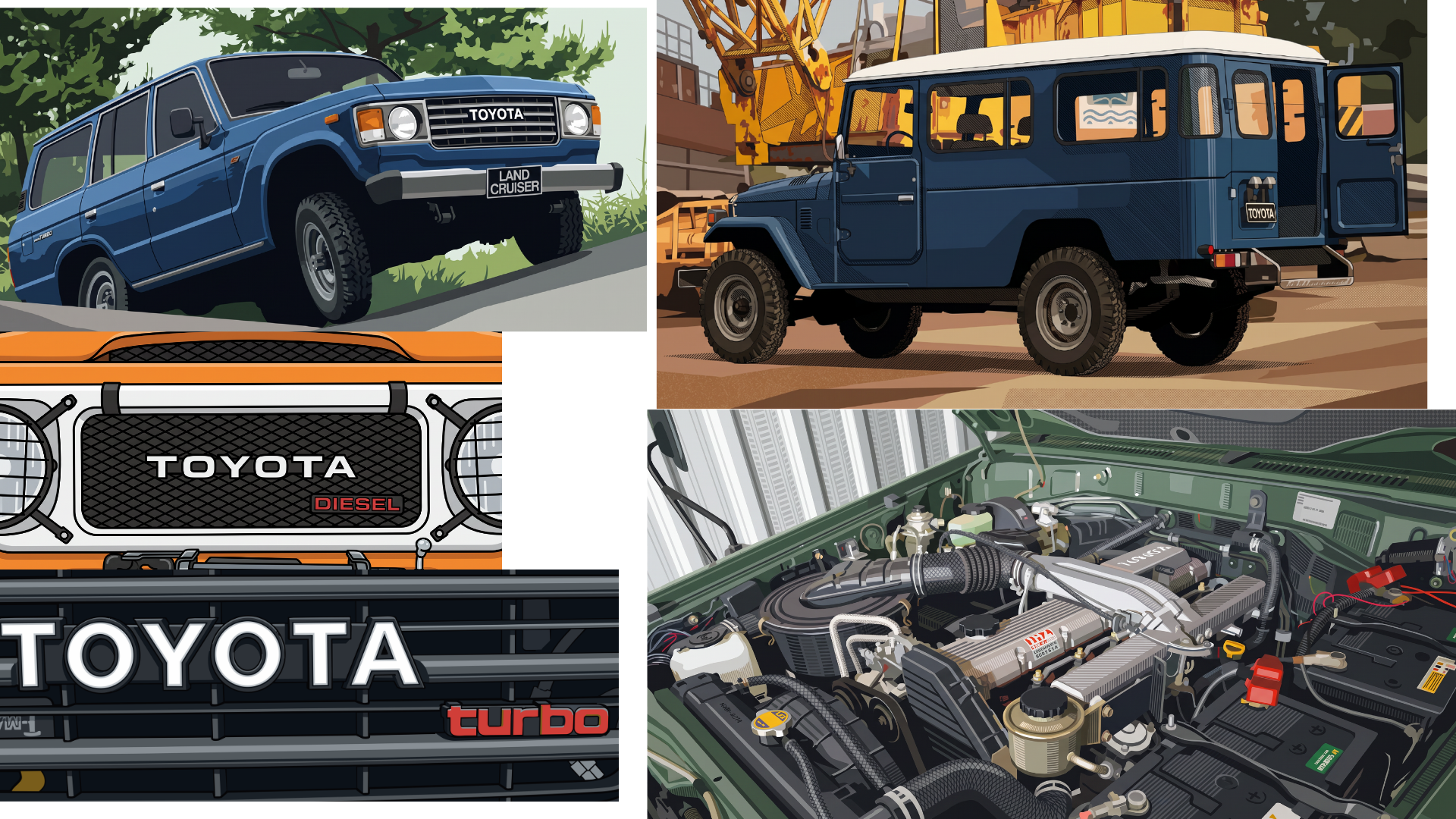
The undisputed workhorses…
…of the Land Cruiser lineup across multiple decades have been the H-series straight-six diesel engines. We’ll include the HZ & the HD-series as well just because why shouldn’t we?
These engines gained an enviable reputation for toughness in the rough and tumble world of mining and conflicts. 12H-T introduced direct-injection turbocharging, the HD-series then introduced 4 valves/cyl. and later electronic fuelling. However, the most legendary of them all is arguably the 1HZ, an ECU-less, mechanically-injected, 12-valved normally-aspirated toiler of an iron block which serves primarily in aid-spec J70s to this date being in service since 1990.
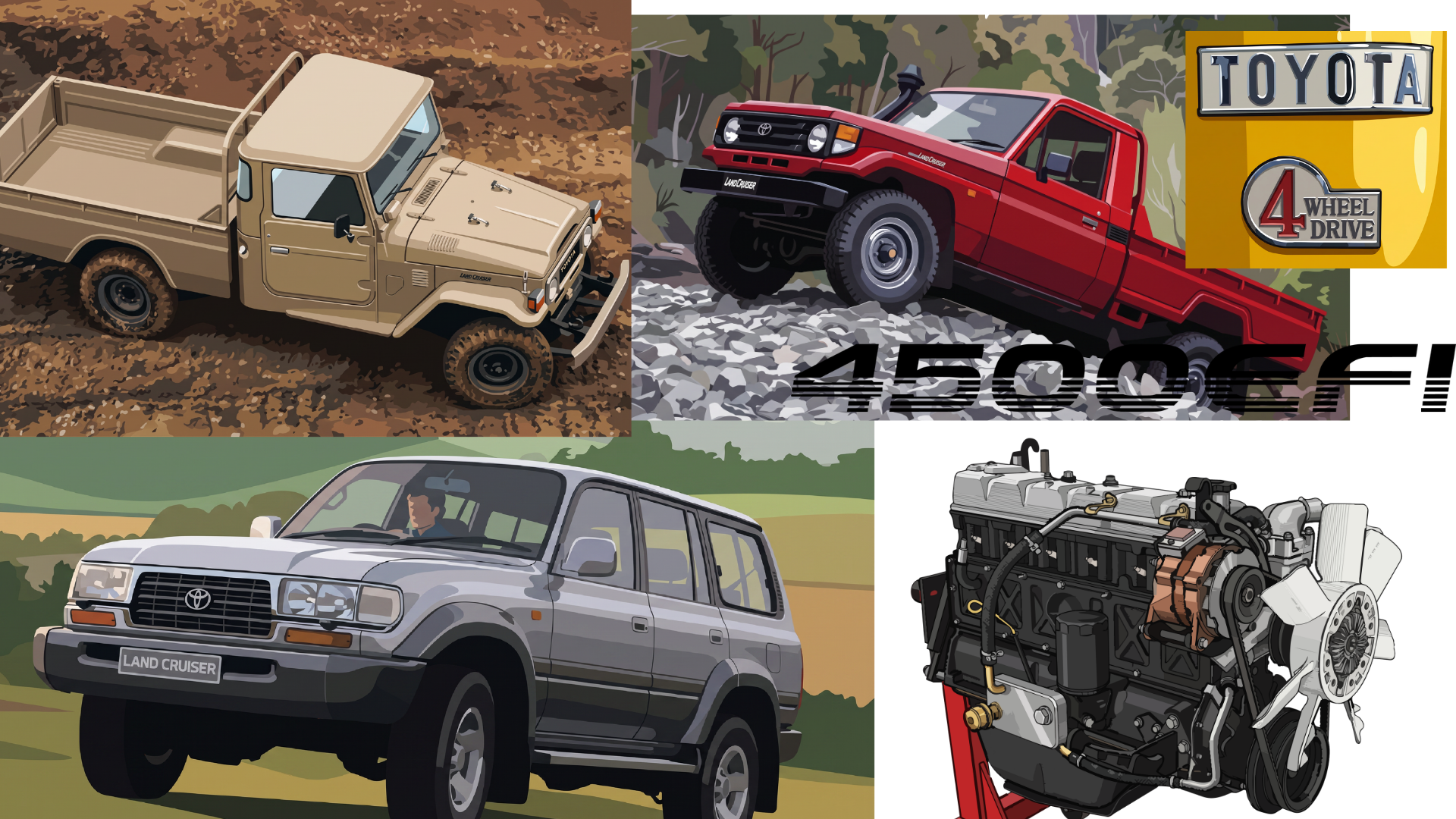
The formidable F-series….
….normally-aspirated straight-six petrol engines defined the Land Cruiser for over half a century. A burly bottom-end, smooth-spinning nature and a general disregard for fuel quality characterised these F and FZ-series engines.
Stupendously easy to mend modular block designs made it a hit among those wanted a refined, fuss-free duty engine with enough power to uproot a stump. Even when loaded, these engines performed better than early diesels. Fuel consumption is best when ignored entirely altogether but Land Rover had to cram in a V8 just to match their muscle. Mind you, early marks derived heavily from the Chevrolet Stovebolt-six of the 1930s.
Doting on the dependable….
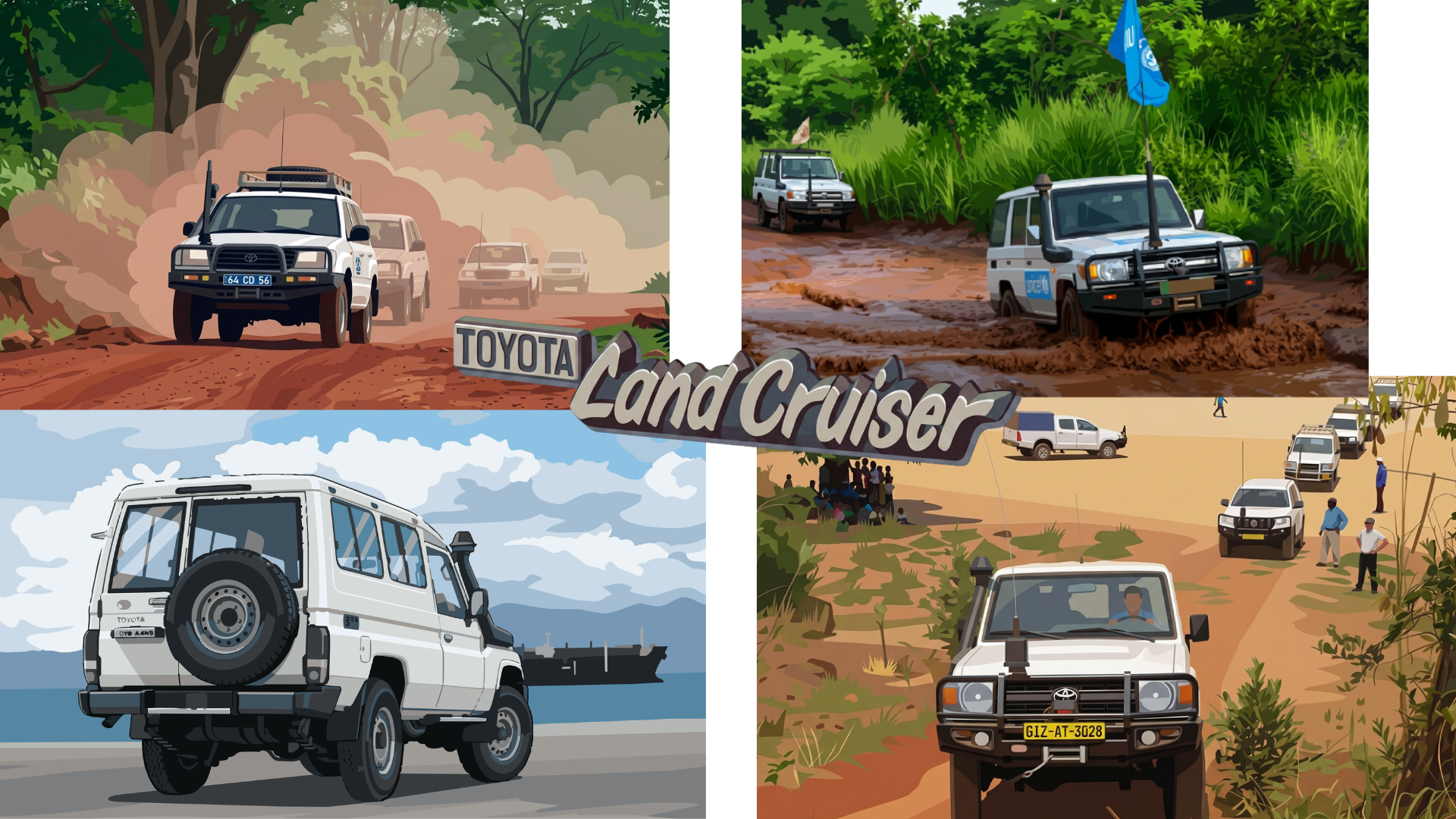
Introduced in 1984, the J70 still soldiers on with farmers, aid-workers, anti-poaching forces and anyone else for whom a machine breakable in any way, spells certain doom. In desolate African or Australian wilderness you still find these as working vehicles, serving as an essential life-support for people who need its services. The 70-series Land Cruiser really does represent the last of a dying breed among automobiles. The robust design carried on for more than 40 years now is a testament to philosophy behind this off-roader.
Offered…
….with at least 6 petrol and 17 diesel engines throughout it’s 4-decade long run, the J70 remains the de-facto choice for people working on the fringes of civilisation. Where paved roads and running water become luxuries, the 70-series Land Cruiser marches on.
Toyota Gibraltar Stockholdings sell most of these J70s to humanitarian-agencies and governments. A white Toyota is a sign above all, in the most inhospitable parts of the world, of better things to come. It’s perhaps the most noble role played by any motor car today.
It’s an antidote for all that has enfeebled modern car designs. True functionality, no matter how basic never goes out of fashion. On the frontiers of civilisation, this machine stands as a reminder to all of us that deeds done diligently, transcend time itself. One should be able to stand on the bonnet of this car and survey a lush lineage of eternal off-roaders, only when one does, he can’t find any. Land Rovers can no longer be fixed, the Nissan Patrol has fumbled, & the new G-Wagens aren’t exactly associated with the right sort.
If you want image or street-cred there are none of them out there, in the wild. However, if you want a true-blue workhorse, one is right there out on an Australian cattle station or a Nigerian WFP field camp with its oil-burner chugging along.
