The AK of automobiles
Toyota Hilux, the everlasting workhorse has been the ceaseless companion for small businesses, farms and mud-plugging motorists worldwide. We’ve been on a bit of a “Toyota Spree” lately with the Land Cruiser, and I seek to continue the momentum with the Hilux. Yes, the pickup which pickup-loving Americans don’t get and the one which Australians lap up by the thousands each month. The humble hauler has been serving all sorts of people since 1968 and is in its ninth generation now. We’ll cover the latest of Hilux generations later. Let’s see how Toyota’s venerable workhorse became the world’s de-facto pickup.
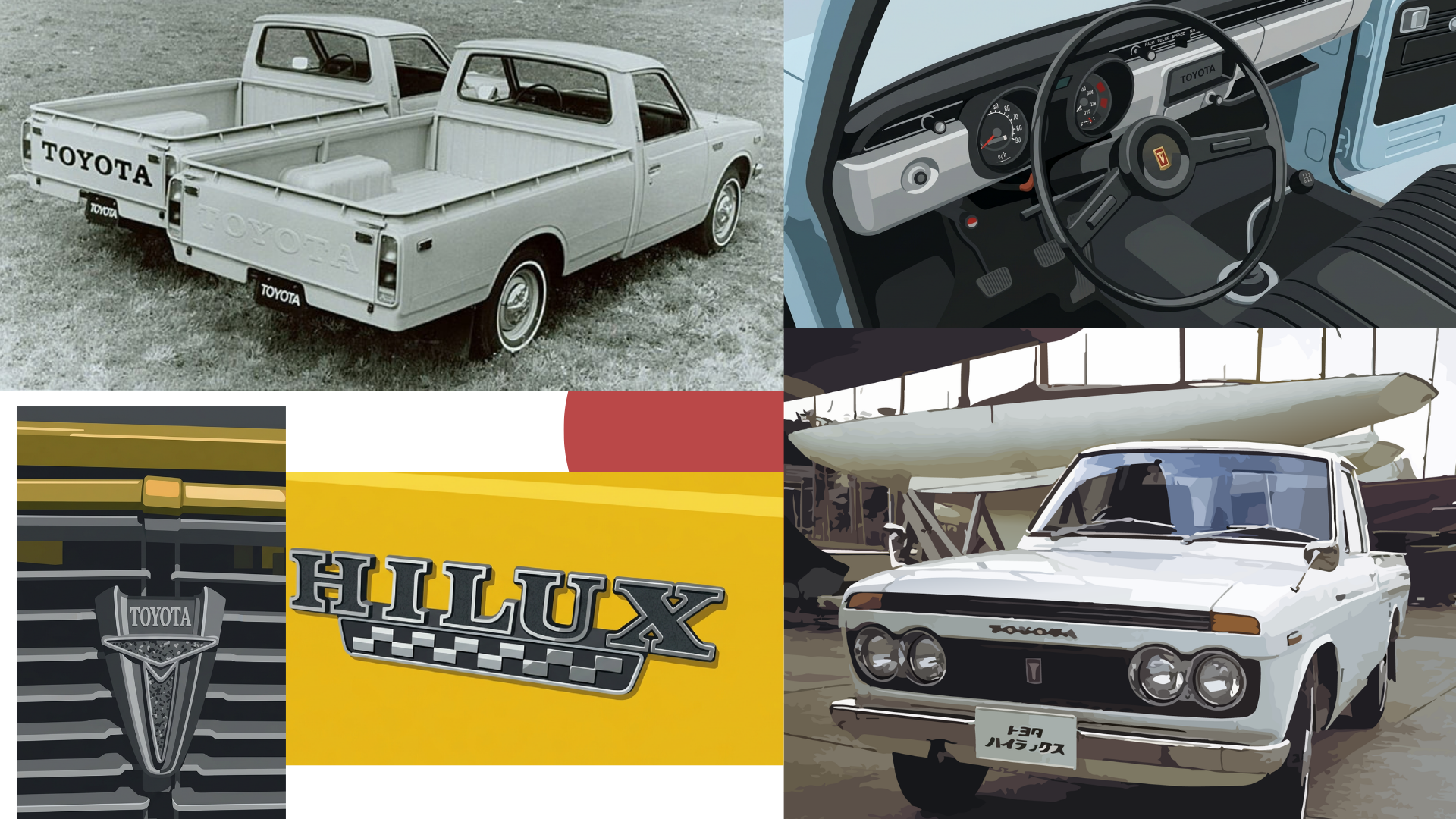
In the early days…
…small, imported Japanese pickups from the likes of Toyota, Mazda and Datsun weren’t taken all that seriously when it came to outright capability when compared to American trucks.
However, their light and trusty nature found many takers and before long, they earned themselves a place among buyers even in the North American market with the now famous, chicken tax.
To circumvent….
….the chicken tax, Toyota shipped their light pickups into the large US market as cab-chassis and then at Long Beach, bolted on a tub paying just 4% in tariffs rather than the 25% generally imposed on completely built imported pickups of the type. A-arms and coil springs at the front with rear live axle with leaf-springs was the norm with small Oriental trucks at the time, so was the short bed with regular cab with Toyotas. This meant Datsuns had a strong footing in the market and a leg up on Toyota until they introduced longer beds of their own in 1972. Also, while the North Americans got a more potent SOHC 2-litre 4-pots by 1972, almost all models sold globally got the 1.6-litre OHV engine.
The second generation was more of the same with a larger 2.2-litre unit and 5-speed manual optional. This was the first one to get an automatic, a 3-speed torque converter in select markets including the home market. By this time, the Toyota pickup was being assembled in South Africa, Thailand, New Zealand and Indonesia among other locations. Starting in 1975, an outfit called “Off-Road Marketing” based in Garden Grove, California developed a 4-wheel drive system for these vehicles and sold them as the “Wolverine 4×4” which mostly used Jeep CJ front axles and transfer cases among other components. In a 2.2-litre 20R petrol paired with a 5-speed manual ‘box configuration, these were available across all US Toyota dealerships.
The third-gen in finally introduced the much-needed 4×4 hardware in Hiluxes down under, while the 1.6-litre was the original offering, buyers could now have the 18R-C 2-litre in the long-wheelbase configuration with either a cab-chassis or a tub. Highway performance was better than the base engines as well with a top speed of 81 mph in the 4×4 mark. The front suspension was now a torsion-bar instead of coils and for the 4×4 models, a live leaf-sprung front axle was introduced.
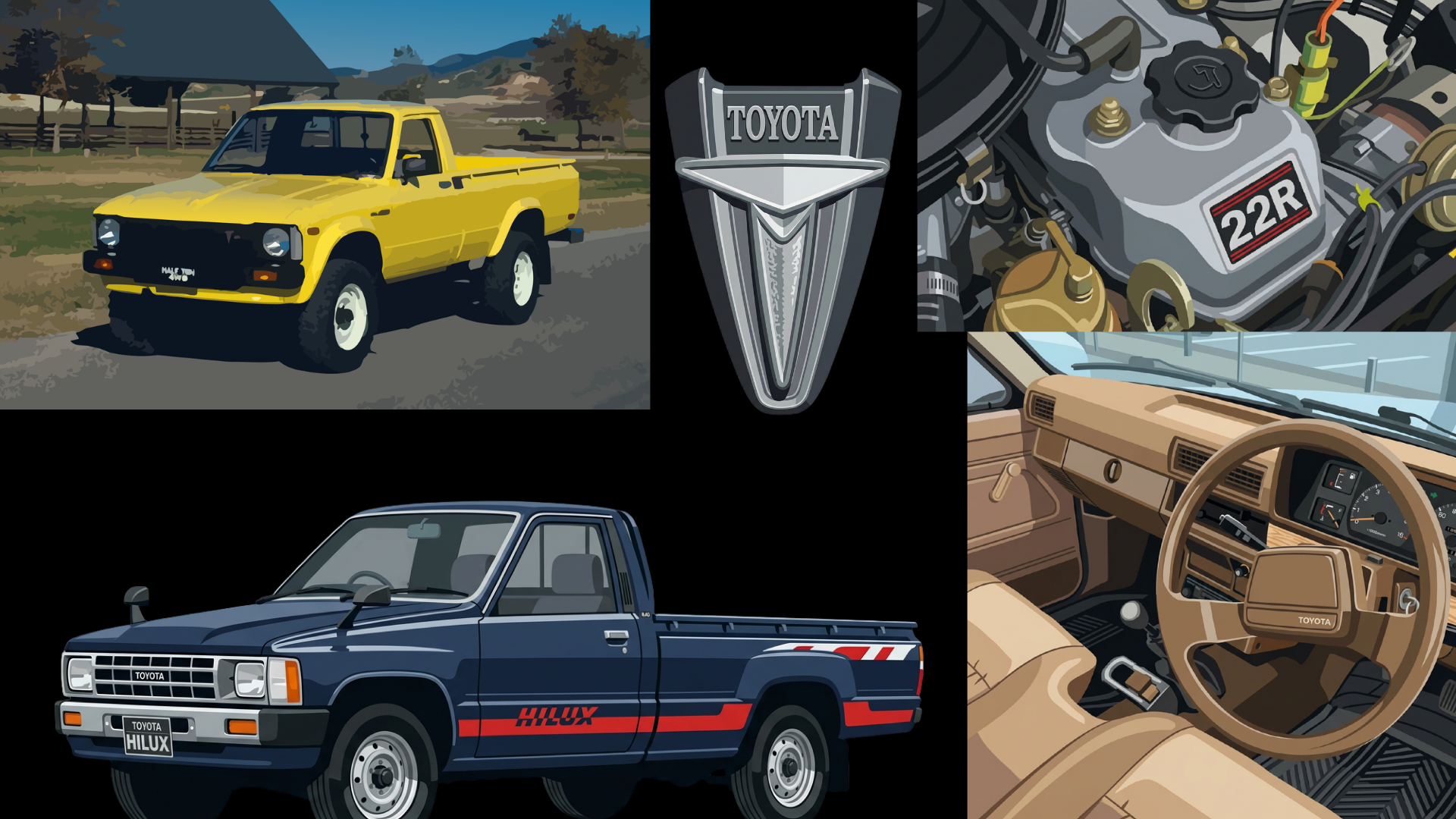
The 3rd-gen….
….set the tone straight for Toyota, more capability for a much wider audience. While Toyota edged out on Datsun with 4x4 hardware, later Datsun 4x4s featured a higher degree of internal comfort with independent front suspension.
To counter the rev-happy Datsun motors, Toyota introduced the now-renowned 22R engine which solidified Toyota’s trusty image across multiple model lineups and was also turbocharged later to take on Nissan 6-pots. More importantly as some might argue, the introduction of the under-stressed cast-iron L-series diesel mills was what truly cemented Hilux’s credentials out in the bog despite their rather unhurried acceleration out on the black-top.
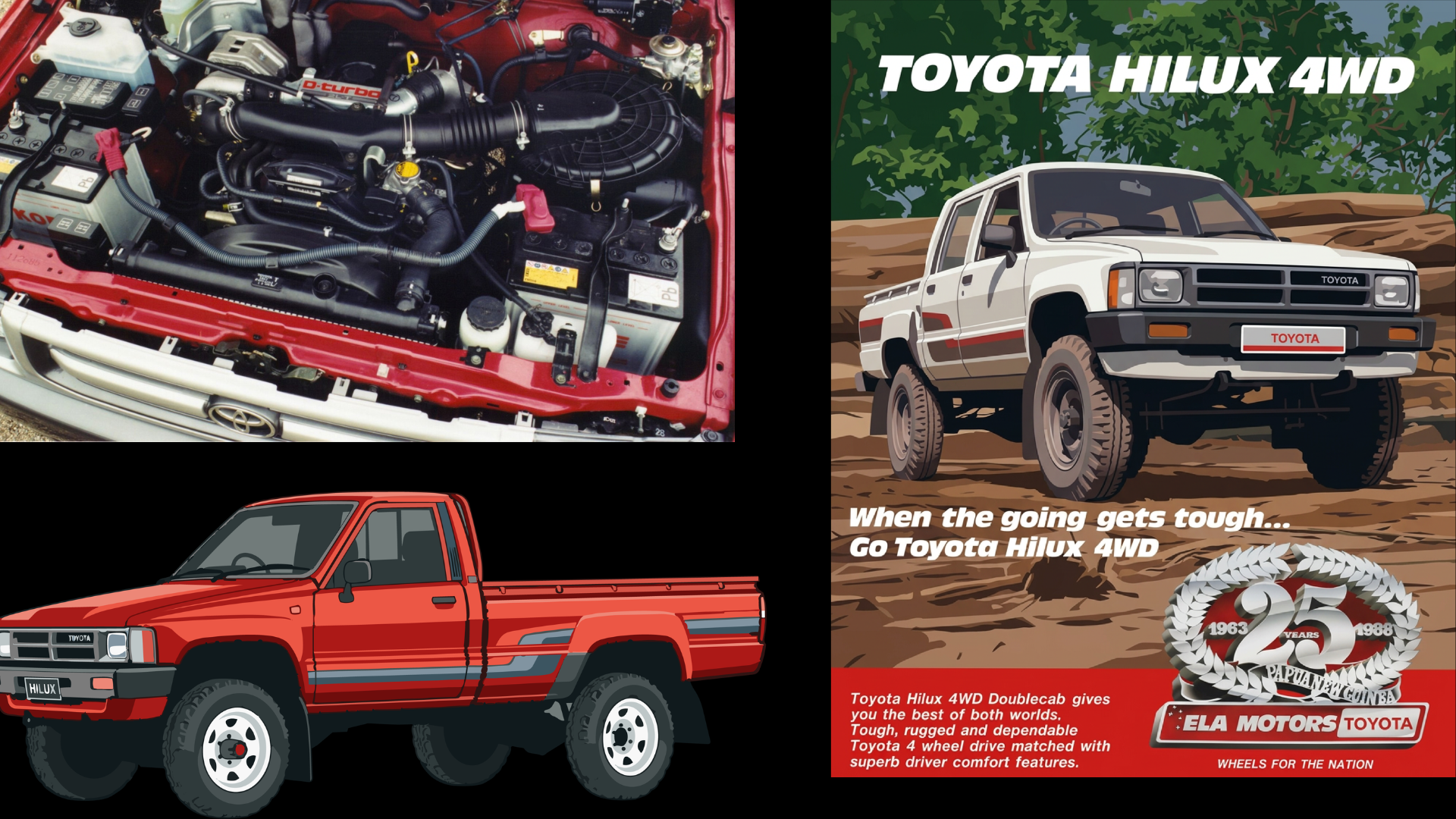
The 4th-gen…
….introduced the 3-litre VZ-E V6 petrol particularly for the North American market to combat the now also-legendary Nissan hardbody’s V6 & a front independent suspension for the 4x4s sold in the US market.
In a rare occurrence, the US & Canadian also got a taste of turbo-diesels in small pickups with the 2L-T. The acclaimed 4Runners made their way into markets with the type being sold as the Hilux Surf in Japan. It became a pop-culture icon starring in Michael J. Fox’s 1985 hit “Back to the future”.
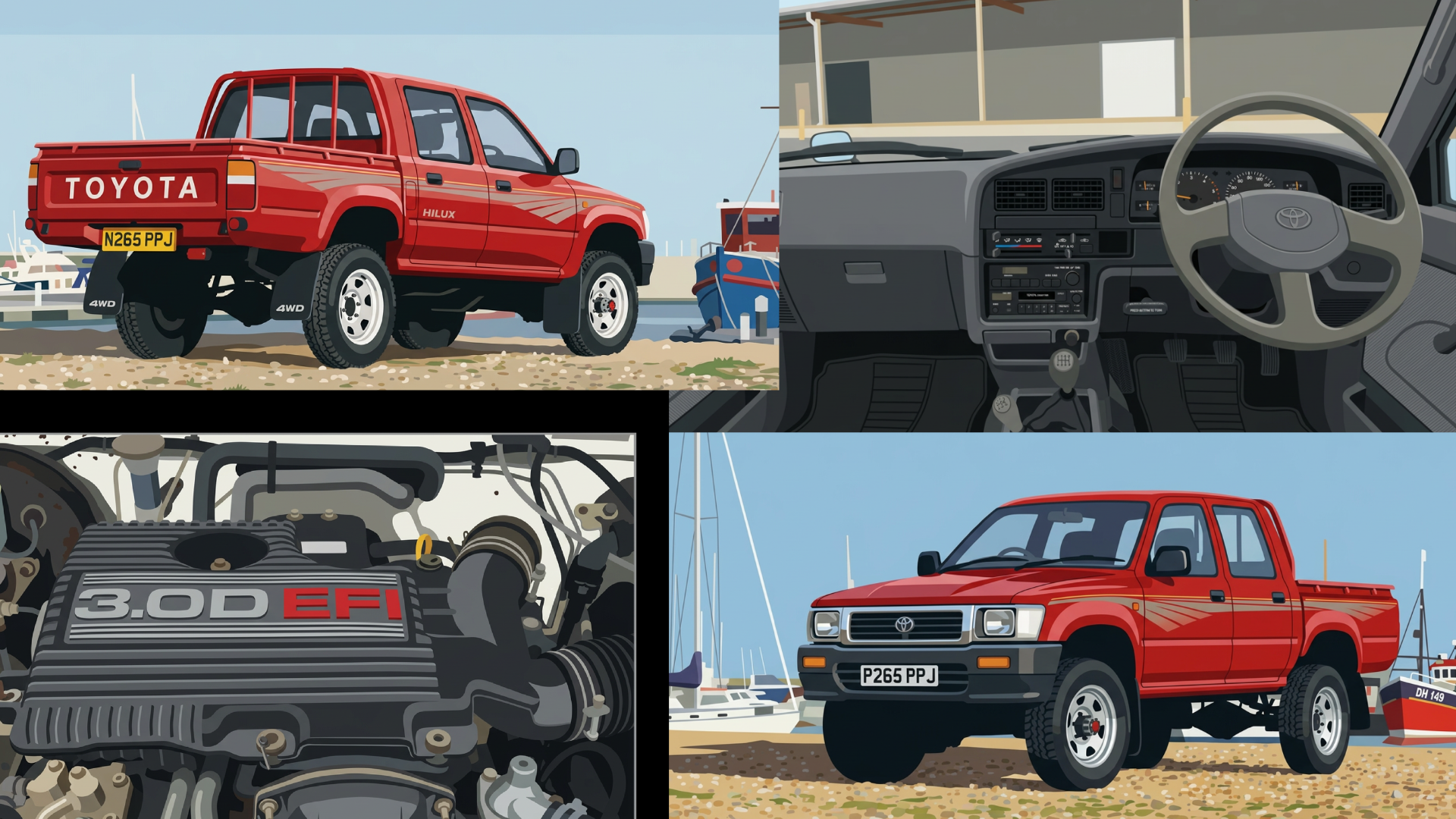
The 1990s…
…had the 5th-gen with one-piece integrated steel loading bay eliminating outer seams offering better rust protection and rigidity. The robust atmospheric L-series motors such as the 2L and 3L remained the staple oil-burners of the lineup with the 5L introduced later, & alongside its electronically-injected avatar 5L-E, offered considerable load-lugging ability. Mind you, the 2L-TE diesels gained an un-Toyota like reputation for not lasting long & were aptly replaced by the more potent 1KZ-TE turbo-diesel which largely addressed the lack of high-speed on-road competency among diesel-powered Hilux variants.
As the last global light pickup sold in US & Canadian markets, the type was upgraded with dual-wishbone front-end for 4WD dual-cab setups.
The Top Gear….
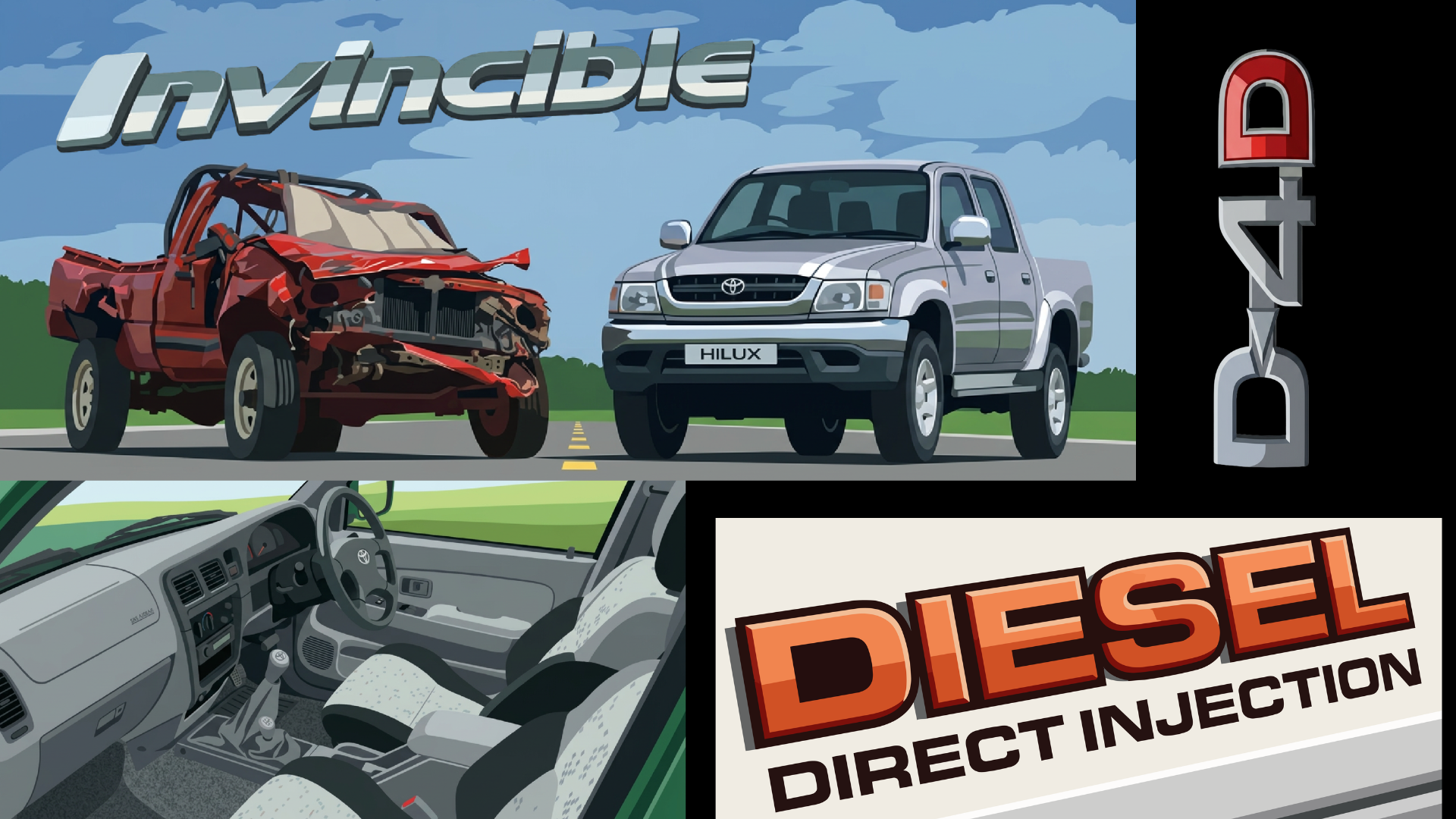
….2L-powered Hilux famously survived falls, waves and fire among other things on the motoring show and Toyota UK didn’t waste the opportunity and introduced the “Invincible” trim on the sixth-gen Hilux.
The common-rail direct-injected D-4D KD-series turbo-diesels now meant the oil-burners could now overtake confidently with heavier trailers at speed out on bitumen. They featured a 32-bit ECU and a variable-nozzle turbocharger (VNT) paired with DOHC 16-valve design, a first for the Hilux. Petrols were further bolstered by the powerful 3.4-litre 5VZ-FE V6 four-cam in addition to the existing cast-iron RZ-series 4-cylinders known for their toughness.
Start of the millennium
Toyota had sold nearly 11 million in over 140 countries by 2001, the type had carved out an enviable reputation and while its Nissan and Mitsubishi Oriental siblings were more than worthwhile rivals, the Hilux had a loyal following of its own. In the hit BBC motoring show Top Gear, Jeremy Clarkson first abused a diesel Hilux around city blocks, hit a tree, then waterboarded it with seawater, dropped it then dropped caravans on it and when even the speedo didn’t break, hit it with a wrecking ball and then set it on fire. It didn’t die.
Co-presenter James May thereafter placed it on a 240-feet tower block and demolished the building. Of course, it didn’t die & drove to the Top Gear studio. Mind you, decades of hard knocks by a farmer in the Cotswolds would be more appropriately representative of real-world wear, however, the Hilux featured in the November 2003 episode had already been used on a farm with almost 200,000 miles and bought for a few hundred quid presumably in a farmyard clearance sale. And it wouldn’t be the last time Top Gear gave the Toyota truck a hard time.
Their ability to last indefinitely is what makes them so well-regarded the world over. The Hilux isn’t sold in the US market, for good reason, Americans enthusiasts and hardcore Toyota aficionados in the US will complain but a pickup truck is not an ideal freeway cruiser, its a tool first and means of conveyance second. The Hilux will always be remembered for its steadfast duty, and if that’s not a way for a plucky pickup to carve out a place in motorists’ hearts, I don’t what is.
