The matter with Motoring
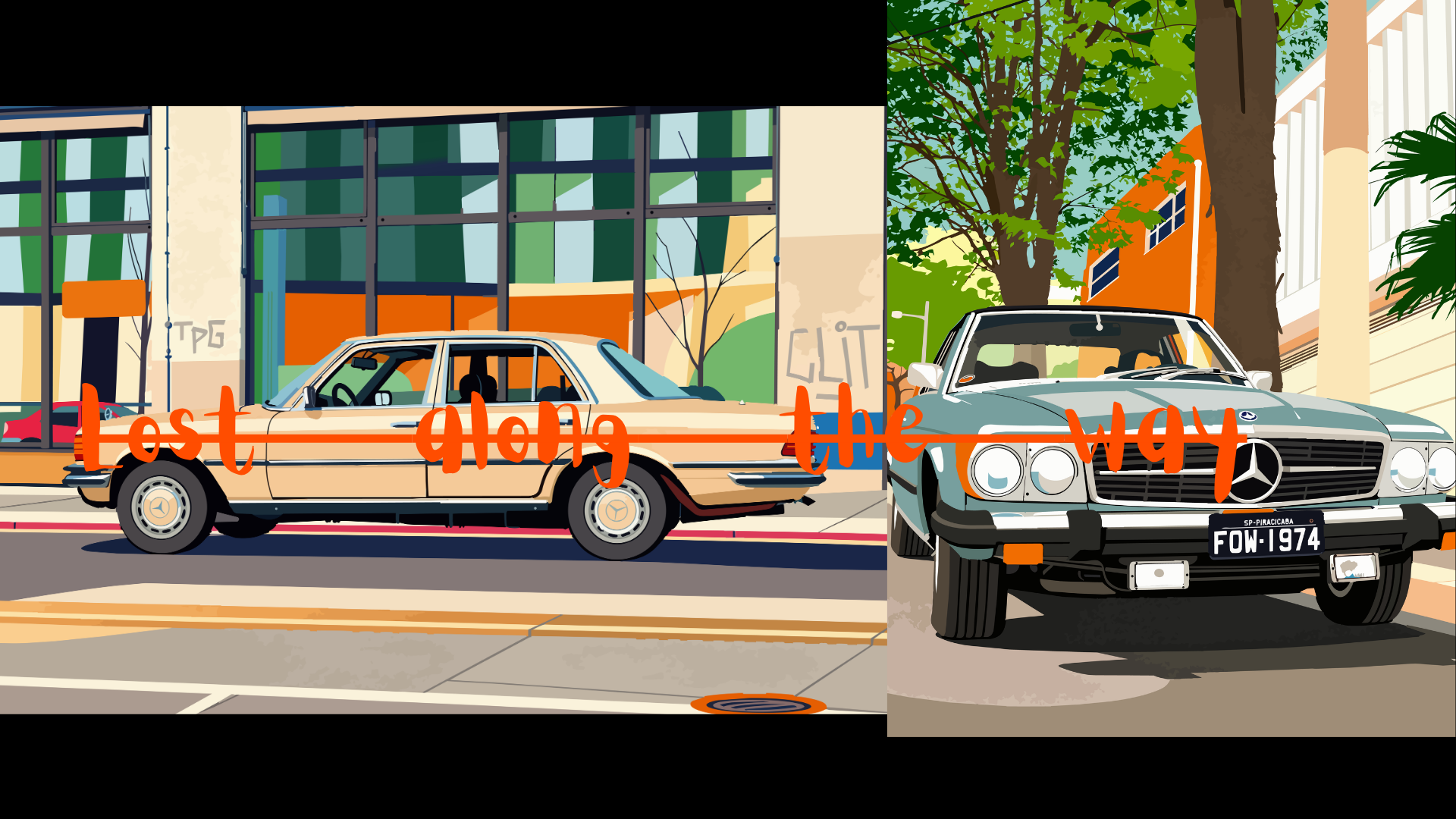
Cars now stand in stark contrast to their forebears, to put it bluntly. All these years, one would imagine the motor car has come a long way and one would be correct. Automobiles are much safer, more comfortable, quieter, faster & advanced in most ways than they were decades ago. Surely, development of an automobile across various metrics might lead one to think the car sold today is better in every conceivable way than it was 24 years ago. However, has this development led to progression? Something seems off as if in a transition, we might have lost a crucial bit of motoring.
Purpose
Do cars serve their intended roles…..better?
Yes…. at least on the surface. They seem like an extension of our digital lives
Will you trade digital integration for mechanical soundness? Longevity was a selling point…. it took a back seat
If a creation is indicative of zeitgeist…. What does that tell us about ourselves today?
The mislabelled “hygiene”….
Many quite reputed auto-jurors have described the build of an automobile, eg: workmanship, finish, durability etc. as something that became common over the years, a fundamental trait that is now taken for granted in favour of equipment, comfort, & tech. Is it true? If a machine breaks more often, then it ought to be worse is a basic premise upon which most of us would agree readily. If so, why do people accept sub-par Tata motors vehicles in India, or Chevrolet pick-up trucks (in North America) which brick themselves in a matter of a few thousands of miles?
Value-engineered motoring was present all over up to the turn of the millennium. It seems progress was measured in different metrics back then, a motor car was supposed to go, turn, stop well & last a long time as well. An off-road car was what it said on the tin, a capable 4×4 and pick-ups weren’t pretentious. Not only were the automobiles were a reflection of their intended purpose they were somehow easier to keep on the road. A 90s Chevrolet is a reliable match for any Toyota built in 2010s. A common thread links most cars built in the 90s, 2000s and before: simplicity. Simple enough to be fixed easily by the side of the road yet not lacking in terms of basic safety features or comfort-oriented amenities.
No, build quality in motor cars today is not “hygiene” across the industry. A true measure of quality is for how long a motor car can be kept on the road without much support from the OEM, ofc a Willys-MM540 or a Ford Escort can be mended. However, if one finds himself locked out of a software in a modern car, facing major electromechanical failures due to sensor failure in the first few months of car ownership in 2026…… it is not built and designed well.

Good enough…
A field watch isn’t a health tracker & fountain pen fonts don’t dry quick, many of the designs we see sticking around for decades aren’t flawless do-it-alls. Then, why cars? Many would argue cars are more than just what I’m saying they are, but do they truly need to be everything to serve a purpose in the best way?
Extracting value
For a long time in the global economy, growth was actually driven by innovation, tech, & truly novel ways of doing things. That’s not something that has fuelled the growth of corporations in the recent decades however, realising once that extracting value is more profitable than actually creating value. It’s the same reason Boeing airliners, once the envy of the world are now seen as the bane of commercial aviation or Mercedes-Benz the purveyors of value, prestige but most importantly of build and engineering are now discredited left and right.
Being engineering-driven first is what made the W140 Mercedes and the Boeing 747 icons of the industry and cemented their maker’s places into the Hall of Fame of Engineering Marvels. In a territory awash with corporates there remain some pockets of resistance. Where legislation grants freedom and consumer preferences are accentuated, nowhere are these traits more evident than in the US pickup truck market. Even in 2026, RAM doubled down on the V8 and will continue introducing more variations, GM will bring in two standard V8s in their upcoming models and Ford has hedged their bets upon a 7.3l powerplant. All this makes Toyota look like a misfit in a market where their V8s once reigned supreme and their turbo-V6s now hammer themselves to critical failure.
It’s hard to see how all this could continue as the economy hits middle-class the hardest, with non-essentials being the first subtraction from the shopping basket. Buying once and crying once is a lot cheaper than buying 3 times in 12 years. As of car design, auto-makers might require to cut back on superficial features as people buy fewer and fewer cars each passing year particularly in markets like North America where the average automobile age is now at an all-time high with 12.8 years in USA and 10.5 years in Canada respectively. With billions of dollars slated for electrification now written off, the priorities plainly aren’t where we thought them to be.
Older>Newer
So, we’re keeping older cars on the roads for longer than ever before, since we can- undercarriages don’t fall clean off after 2 winters, the air conditioning blows cold even after the 2nd marriage and motors seemed to have abandoned their fondness for the flatbed a while ago. A VW Jetta diesel will outlast any small capacity turbo-petrol by a long shot while delivering better economy yet it isn’t exactly lacking in amenities. Ford cars are more now more recalled than a school bully’s parents while a 90s to early 00s Taurus, which wasn’t considered the best-built in it’s time would have run rings round newer models when it came to service bills and component longevity. Even Toyota, the longstanding marque exuding quality now finds its pickup truck engines no less, breaking apart when they already had the regular V8 recipe, perfected. Even globally, their decision to shift to a 6-pot diesel ditching the likes of the VD bent-8 seems to be wrong-footed.
Emissions? Sure. Choking populations & industries economically indefinitely seems to be the obvious alternative to choking them quite literally down the road, never mind one could always avoid that outcome using cheaper, greener ways and save trillions.
When it comes to modern cars, one doesn’t want a giant screen to operate a glovebox, or a pop-out door handle that refuses to work seasonally. As a species, I would like to think we are smarter and haven’t ran out of great ideas to make our lives better. Well, unless we devise teleportation we must use our cars and if we are going to use our cars, why not use them like cars? Do we really need them to collect data? Do carmakers really need to be forced to spend tons of cash on EV tech that is the furthest thing from green-mobility? The answer is no.
The question an ordinary motorist might ask: can’t we use 2026 tech to make the 2009 car better? Less complication, more affordable, fewer electricals, easier to mend, can the automakers do it? Because that is what will sell motoring to the next generation in this economic climate.
The innards…
….of a luxury car matter more than that of a regular car, it’s a place were marques often showcase their finest traditions and advancements.
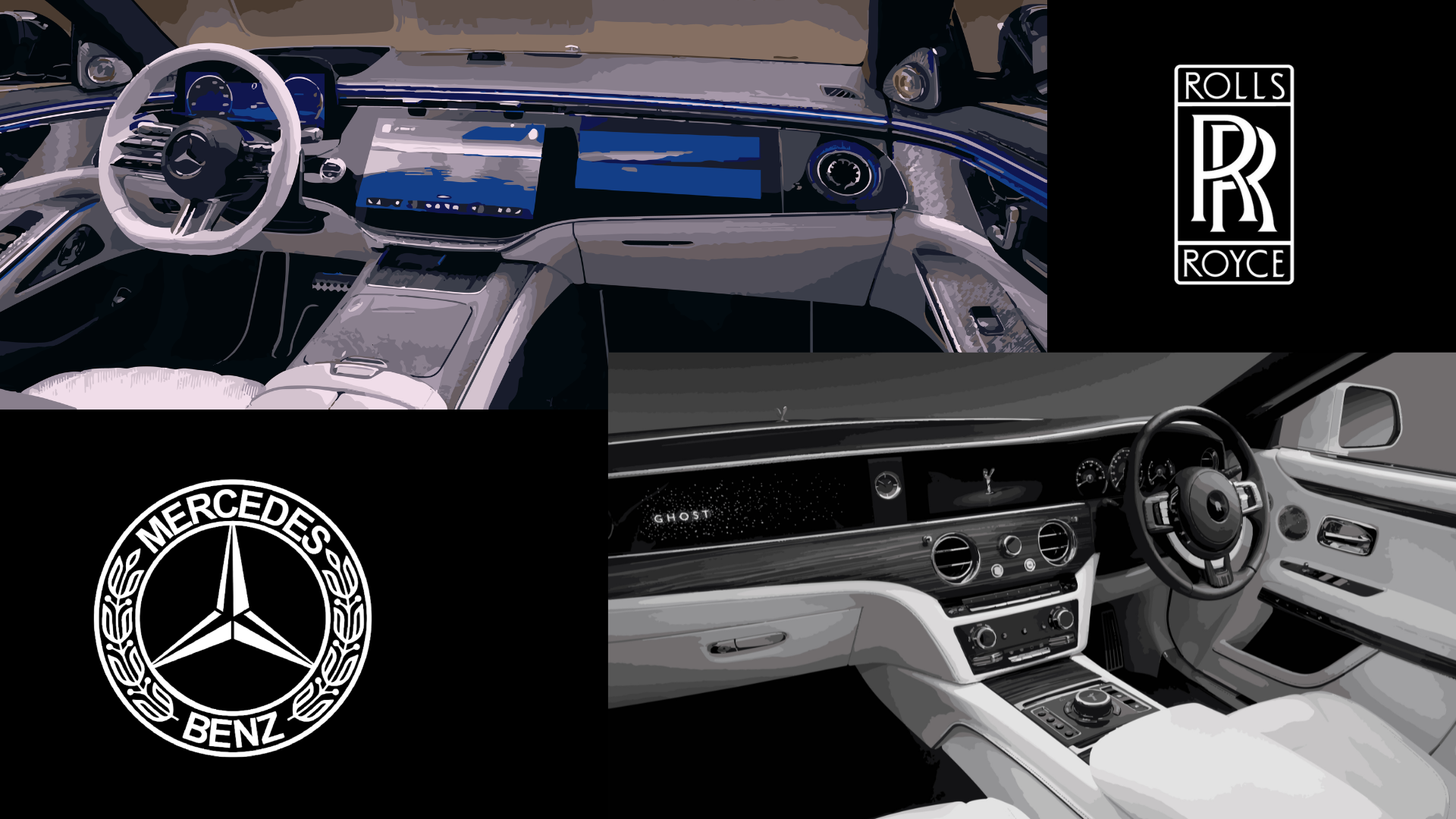
However, when ostentatious tech takes over time-tested heritage as the prevailing element as seen in the teutonic machines of today, one finds himself compelled to question the luxury credentials of the automobile.
Luxe litigation
Luxury cars will have it harder out there because Germans have decided to bejewel their newcomers with tawdry design and screens in models weighing more than the moon instead of making automobiles that truly were a cut above everyone else not long ago. If progress is gauged in screens, what vision do we have of the future?
A 35k USD Tesla built shoddily has screens all round, if provocative annoying screens are the norm for luxury nothing separates exclusive automobiles from lesser automobiles. The use and implementation of tech is no longer novel thus, it seems generic and of course it relegates modern luxury cars to a disposable status by most metrics of luxury as the screen-laden pavement prowlers wouldn’t have the timelessness of an LS400 Lexus. As a motor car finished to the highest standards and not as a cost saving exercise in supply chain management, tech implementation in luxury cars is now probably best represented by the Rolls-Royce Ghost with a “Post-opulent” approach to refinement, doing less better.
One might argue a Tesla with its disruptive provisions like self-driving is luxury as the highest form of convenience. I tend to disagree as a household appliance that does all your chores for you all on its own is the highest form of convenience but not truly a luxury good. The King will have his uniformed housekeeping staff look to his manor, that’s luxury, the finest form of quality & experience. Exalt luxury to opulence and now you have sybaritic forms of motoring like the Rolls-Royces and the Duesenbergs of the world. The employment of digital tech in luxury as a means to peg them above the everyday models was tenable at a time when cars still had wind-down windows. Not anymore, especially when lowly models with ill-fitted panels have a larger screen…. that should have made each car an uber-premium affair as we live in times where day-old German trims creek anyways.
The Teutonic pitch to aristocrats seems no longer to be unparalleled engineering or the ultimate driving machine but tacky tech and a misplaced definition of tangible elements which once made their automobiles the best in the world. To answer our question, yes we did lose something: the vital human element, the very organic quality that makes our creations full of life.
